
10 Practical Ways to Improve Sales and Distribution Management

A sale can only be called a sale once the product has gotten into the hands of the customer. But many companies end up losing their orders between booking and delivery of the product. This is not because of the quality of the product itself but because of the inefficiencies in the process of sale and distribution.
Combination of sale and distribution leads to fast orders, minimum stock shortages and happier customers. The lack of it causes the company to lose money without even realizing it. Listed below are 10 easy and quick ways to address this issue from now. Pure and simple tactics without much theory for small to medium sized companies. Let’s get started without any delay!
1. Set Clear Sales Goals and Performance Targets
Your team can’t hit a target nobody has explained. Good sales management starts with goals that are simple, specific, and tied to real numbers. Break the yearly target into monthly and weekly steps, and give every salesperson a clear share.
- Set targets for each territory, product, and distributor
- Keep goals realistic, not just exciting
- Review progress every week, not once a year
When people know what’s expected, they work with focus.
2. Automate Daily Operations with Sales Management Software
Spreadsheets and WhatsApp messages work only until the business grows. Then orders get missed and nobody knows the real stock. Modern sales management software puts everything in one place.
- Order booking and invoicing without double entry
- Live view of field team visits and sales
- Automatic stock alerts and payment reminders
Pick one tool your team will actually use. Our Sales Transformation service can help set it up.
3. Strengthen and Optimize Your Distribution Channel Network
Your products are only as available as your channels. Look at where your customers actually buy: wholesalers, retailers, dealers, or online. Then check which areas you’re missing.
- Map every territory and spot the uncovered ones
- Drop channels that cost more than they earn
- Add new routes, like local sub-distributors or online sales
A smaller, well-covered network often beats a wide one full of gaps. Review it every six months.
4. Improve Inventory Management and Demand Forecasting
Too much stock ties up your money. Too little loses you sales. The fix is knowing what moves, and when. Check past sales by season, festival, and region before you place the next order.
- Count stock regularly, not only at year-end
- Mark slow-moving items early and clear them
- Keep extra buffer for your fast sellers
Even a simple monthly review can cut dead stock and missed orders.
5. Train, Equip, and Motivate Your Sales Team
Your field team is the face of your brand. A good area sales manager does more than chase numbers. They coach, ride along on visits, and solve problems fast. Good sales management also means the right tools and fair rewards.
- Train on product knowledge and handling objections
- Give simple tools like price lists and order apps
- Reward effort and results, not just big wins
Motivated people stay longer and sell better.
Read More: Ways to Improve Employee Behaviour and Workplace Performance.
6. Optimize Delivery Routes and Transportation Management

Fuel, time, and late deliveries quietly eat into your profit. Plan routes by area instead of sending vehicles wherever orders come from.
- Group nearby orders into one trip
- Use GPS tracking to see where vehicles are
- Compare transport costs across vehicles and vendors
Also set fixed delivery days for each area. Retailers then know when to expect stock, and your trucks run full. Fewer wasted kilometres also means lower fuel bills.
7. Strengthen Distributor and Retailer Partnerships Through Engagement
Distributors and retailers back your brand only if they feel looked after. Talk to them often, not just when targets are due.
- Visit regularly and listen to their problems
- Pay margins and incentives on time
- Solve complaints and returns without long delays
- Share new launches and offers before anyone else
A distributor who trusts you will push your product first. Treat them like partners, because that’s what they are.
8. Monitor Sales and Distribution Performance Through Core KPIs
What you don’t measure, you can’t fix. Pick a few numbers that truly show how your business is doing, and check them on a fixed day each week. Ask every area sales manager to review these KPIs for their own territory and explain any dip. Keep the list short. Too many numbers confuse people, and nobody acts on them. Review them as a team, not as a punishment.
Important sales and distribution KPIs include:
A simple reporting routine, backed by system transformation, keeps these numbers accurate and easy to review.
9. Improve Customer Experience and Order Fulfillment Speed
Customers don’t just remember your product. They remember how easy it was to order and how quickly it arrived. Make ordering simple and keep them updated.
- Confirm every order on the same day
- Share delivery status by call, SMS, or WhatsApp
- Check items before dispatch to avoid shortages
- Keep fast-selling items ready for same-day dispatch
Fix mistakes quickly and without arguments. A customer who gets a fast solution usually stays.
10. Improve Strategy with Data and Predictive Analytics
Your sales records already hold the answers. They show which product sells in which area, which retailer is slowing down, and when demand picks up. Predictive analytics simply uses these patterns to work out what comes next.
- Spot slowing retailers before they stop ordering
- Predict festival and seasonal demand
- Decide where to add distributors next
- Plan stock and manpower for the coming quarter
Start small with monthly sales reports, then build from there. Good data also leads to better business decisions.
Real World Example
Hindustan Unilever faced a distribution problem in rural India: many small villages were too costly to reach through the usual distributor route. Its answer was Project Shakti, started in the early 2000s. Women from self-help groups became micro-entrepreneurs, buying stock from rural distributors and selling door to door in their own villages. HUL got wider reach, and the women earned an income. It shows that smart distribution design can open new markets.
Common Challenges in Sales and Distribution Management
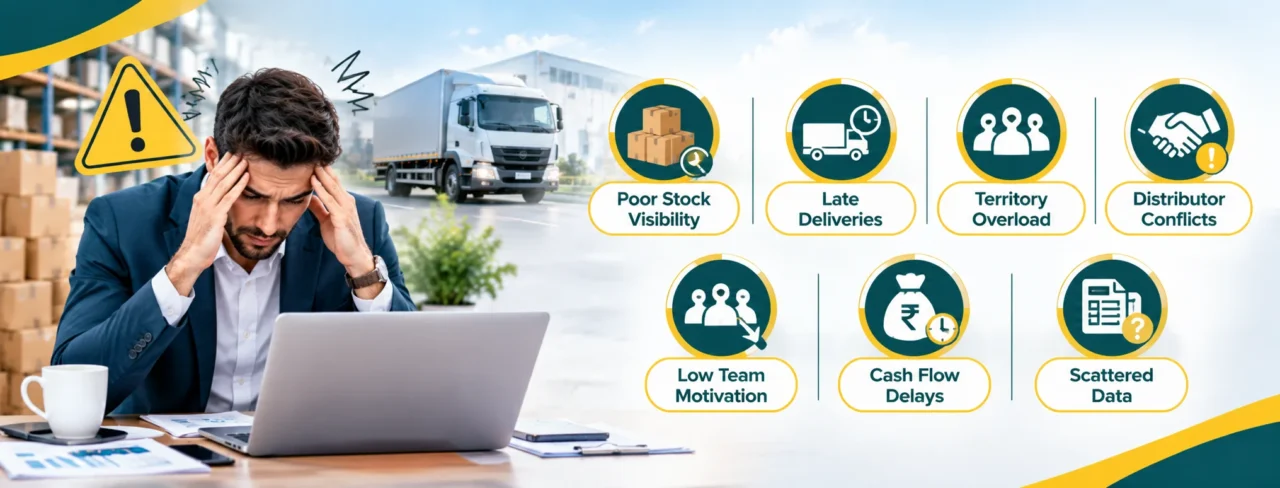
Almost every business hits roadblocks in sales and distribution management. Here are the most common ones you should watch for.
- Poor stock visibility: Not knowing what is lying in which warehouse or shop
- Late deliveries: Weak route planning and unreliable transport
- Territory overload: An area sales manager handling too many outlets to manage properly
- Distributor conflicts: Disputes over margins, areas, or pricing
- Low team motivation: Unclear targets and slow incentives
- Cash flow delays: Distributors and retailers paying late
- Scattered data: Orders in chats, sheets, and notebooks with no single record
None of these fix themselves. Pick the one hurting you most, solve it first, and then move to the next.
Conclusion
Better sales and distribution management doesn’t need big budgets or complicated systems. It needs clear goals, the right tools, a trained team, and distributors who trust you. Start with one or two of these ten ways, see the change, and then add more. Small, steady improvements in sales management add up faster than you’d expect.
If you want expert help building a sales system that fits your business, business coaching in India with Hitesh Ghataliya at Life Pathshala is a good place to start. After all, the best sales process is the one your team actually follows.