

How to Improve Decision-Making Skills as a Business Owner

Business management requires making critical decisions daily ranging from financial management, employee management, selection of suppliers, pricing, and even business growth. The effectiveness of the decisions made could have an impact on the performance of the business as well as the success of the business in the future.
Decision-making in business does not necessarily involve doing things immediately without thinking. Instead, decision-making involves analyzing information, taking into consideration the associated risk, alternatives and previous results.
In this blog post, we will be looking at how business owners can improve their decision-making skills to make better business decisions. Let’s get started!
Why Decision-Making Skills Matter for Business Owners?
Every decision affects your money, your team, your customers, and your future. Making decisions without proper information is like driving in the dark. Sometimes you reach safely. But the chances of a costly mistake are very high.
Good decision-making does not mean you will never go wrong. It simply means you have a clear thinking process before you act — and that process alone can save you from repeating the same expensive mistakes again and again. If you’d like personalised guidance in building that process, business coaching services are built exactly for this.
7 Ways to Improve Decision-Making Skills as a Business Owner
1. Base Your Decisions on Real Facts
Many business owners decide based on what feels right. And sometimes that works. But feelings alone are not enough when real money is involved. Look at your actual numbers regularly – monthly sales, customer feedback, expenses, and cash flow. These numbers tell you the real story of your business.
Before any important decision ask yourself –
- What do I already know for sure?
- What information am I still missing?
- Are my assumptions based on facts or just my belief?
This simple habit stops you from making decisions based on guesswork – which is one of the biggest reasons businesses lose money unnecessarily.
2. Understand the Problem Before Jumping to a Solution
This is the most common mistake business owners make. They jump to solutions before understanding the real problem. Sales dropped this month. Your first instinct is to reduce prices. But is price really the problem? Or are fewer customers visiting? Or have your regular customers stopped coming back? If declining sales is the real issue, it may be worth strengthening your approach through sales transformation coaching.
Write the problem in one clear sentence first. Then ask why it is happening. When you understand the real problem – you will find a much better solution and stop wasting money fixing the wrong thing.
3. Always Look at More Than One Option
Never fall in love with the first solution that comes to your mind. For every important decision – think of at least two or three different options. Compare them honestly on cost, time, risk, and expected result. For example your team cannot handle increasing customer enquiries. You have four options –
- Hire one more person.
- Automate part of the process.
- Outsource the work.
- Fix the existing workflow.
Writing options side by side helps you choose clearly – instead of going with whatever feels right in the moment.
4. Learn to See the Risk Before You Take the Step
Every big decision carries risk. The question is not how to avoid risk – it is how to understand it before you commit. Before moving forward ask yourself –
- What is the worst that can happen here?
- How likely is it to actually happen?
- How much money could I lose?
- What is my backup plan if this does not work?
This kind of thinking protects you from expensive decisions that looked good on paper but had no safety net underneath.
5. Know Your Basic Business Numbers
You do not need a CA degree. But you do need to understand your basic numbers – revenue, expenses, profit margins, cash flow, and working capital. These numbers answer the most important business questions. Is my business actually profitable? Which product is making money and which one is draining it? Can I afford to hire someone right now?
Before any major investment simply ask – can my business comfortably handle this expense? And what result am I realistically expecting in return? If you cannot answer clearly – understand your finances better before moving forward.
6. Do Not Let Emotions Drive Big Decisions
Business is personal. You built it from scratch. You are attached to your products, your team, and your ideas. But sometimes that attachment blinds you from seeing what is really working and what is not. When you feel stuck – ask yourself this one question –“If this was someone else’s business and they asked for my honest advice – what would I tell them?”
That question creates distance between your emotions and the facts. And most of the time the right answer becomes very clear immediately. That question creates distance between your emotions and the facts. And most of the time, the right answer becomes clear immediately. Building this kind of clarity and mindset is exactly what self-transformation coaching focuses on.
7. Review Your Decisions and Learn From Them
This is the step most business owners skip. And it is the most powerful one. After any important decision – go back and check what actually happened versus what you expected.
Ask yourself honestly –
- What did I think would happen?
- What actually happened?
- What did I get right and what did I miss?
- What will I do differently next time?
Keep a simple note of your important decisions, your reasoning, and your actual results. Over time this becomes your personal playbook – built from your own real experience. No book can teach you what your own mistakes can.
A Simple 6-Step Decision-Making Framework
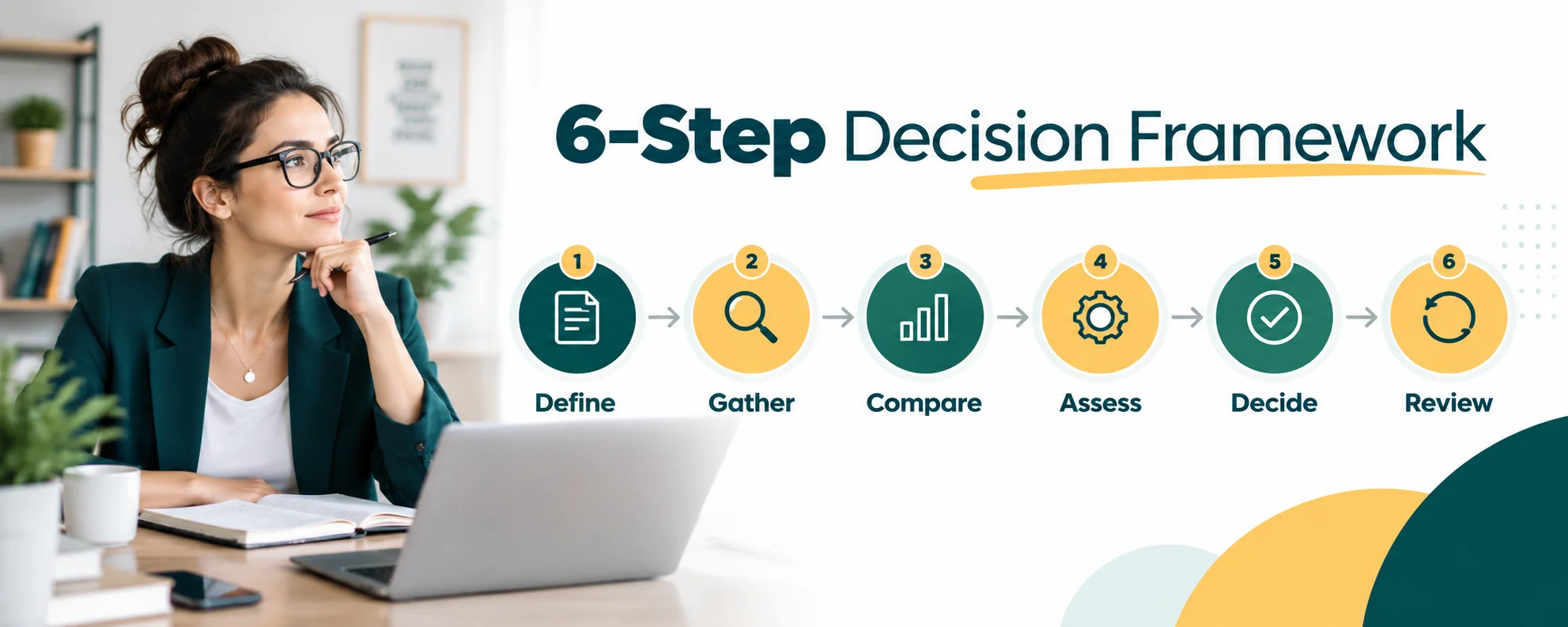
For any important business decision follow these six steps –
- Step 1 – Define: What exactly is the problem or opportunity?
- Step 2 – Gather: What facts and numbers do I need?
- Step 3 – Compare: What are my realistic options?
- Step 4 – Assess: What are the costs, risks and possible outcomes?
- Step 5 – Decide: Which option makes the most sense based on facts?
- Step 6 – Review: What actually happened and what did I learn?
Simple. Practical. Works whether you run a small shop or a growing company.
Conclusion
Better decision-making does not happen overnight. It builds – one decision at a time. The business owners who grow consistently are not the ones who always get it right. They are the ones who think clearly, stay honest with themselves, take guidance when needed, and learn from every outcome.
If you are ready to make smarter decisions and take your business forward – Life Pathshala is here to help. Book your free discovery session today and take the first real step toward the growth you deserve.