
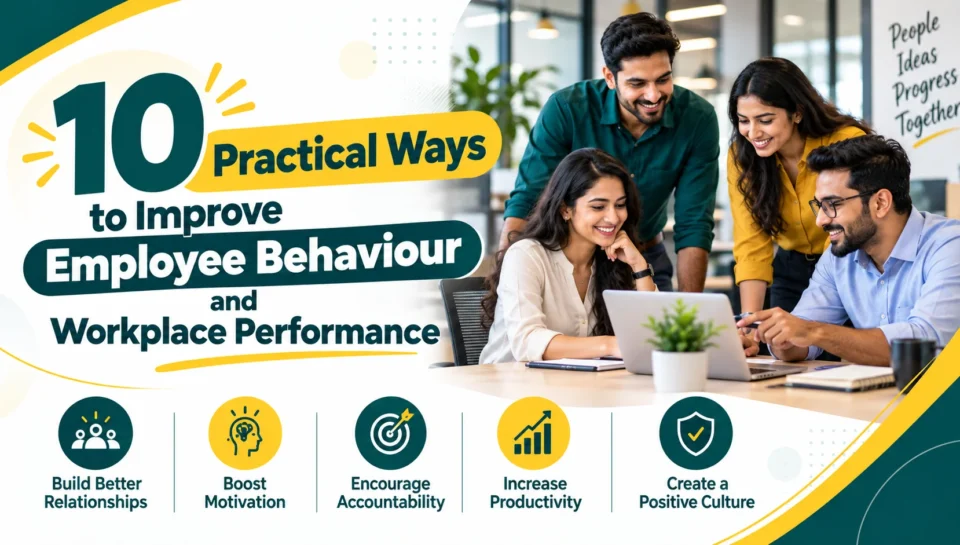
10 Practical Ways to Improve Employee Behaviour and Workplace Performance
Every successful company has a team which understands how to behave. Process of work, teamwork, customers’ satisfaction, development of business – none of this can be accomplished if your people are not on the same wavelength. It all begins with behaviour.
Additional regulations and sanctions may seem to be the answer to the problem – but in most cases they prove ineffective. If you want your staff to actually improve their behaviour, you should first find out why they behave this way at all.
The cause should be fixed – and the behaviour will change accordingly. For business owners and managers who need structured guidance in improving leadership, teams, and overall workplace performance, business coaching india can also provide a practical framework for identifying and addressing these challenges.
Expectations, quality management, feedback, training, and positive atmosphere in the workplace – this is what counts. Continue to read and learn about Practical Ways to Improve Employee Behaviour and Work Performance. Let’s get started!
1. Set Clear Expectations and Workplace Standards
Before you expect anything from your employees – make sure they actually know what you expect from them.Be clear about attendance, communication, teamwork, and professionalism. Keep your rules simple. And apply them equally for everyone – no exceptions.
But do not just give instructions. Explain the reason behind them. If punctuality matters to you, tell your team how one person coming late affects the entire schedule. When people understand the why – they take it far more seriously.
2. Improve Communication Between Employees and Managers

Honestly – most workplace problems start with poor communication. Misunderstandings, missed deadlines, unnecessary conflicts – almost all of them trace back to a communication gap somewhere. Create a space where employees can freely ask questions, share concerns, and talk about problems before things get out of hand. Regular one-to-one meetings help a lot.
And when someone speaks – actually listen. Not just nod and move on. Employees respond much better when they feel genuinely heard – not just managed.
3. Provide Regular Feedback
Do not wait for the annual review to tell someone how they are doing. By then it is usually too late to fix anything. Give feedback regularly. Keep it specific and focused on behaviour – not personality. Instead of saying “you are careless” – say “this report had repeated errors, let us figure out how to avoid that going forward.”
A good mix of honest appreciation and clear correction makes these conversations helpful – not stressful.
4. Recognise and Reward Positive Behaviour
People repeat what gets noticed. Simple as that. If an employee goes above and beyond – acknowledge it. Recognition does not always mean a bonus or a raise. A genuine thank you, a quick shoutout in the team meeting, or a new growth opportunity can mean just as much. Sometimes even more.
The key is making it feel real and directly connected to what that person actually did. Generic praise like “good job everyone” motivates nobody.
5. Invest in Employee Training and Development
Sometimes an employee is not performing well – not because they do not want to, but because nobody ever taught them how. Before assuming the worst, check if there is a skill gap. Offer training in areas like communication, time management, technical skills, or customer service – whatever is actually relevant to their role. Strong customer service training can also help employees make a lasting impression on the customers, turning everyday interactions into better customer experiences.
Talk to your team. Find out what they struggle with. Then give them learning opportunities that genuinely help them do their job better.
6. Set Measurable Performance Goals
Telling someone to “do better” is not a goal – it is a wish. Give your employees something concrete to work towards. Use SMART goals – Specific, Measurable, Achievable, Relevant, and Time-bound. Instead of saying “improve customer service” – set a clear target around response times or satisfaction scores.
Review progress regularly. This helps you catch problems early and gives employees a clear picture of exactly where they stand. The same approach can be applied at the wider business level, where creating powerful business plans helps turn broader business objectives into clear, measurable actions.
7. Build a Culture of Accountability
A supportive workplace and an accountable workplace are not opposites – you genuinely need both. Employees should know there are real consequences for repeatedly ignoring workplace standards. But before jumping to action – managers should first understand the full situation properly.
When accountability is applied consistently and fairly – employees understand that the rules apply to everyone. Not just certain people. That is what builds real respect in a team.
8. Address Workplace Conflicts Early
Ignoring a conflict does not make it disappear. It just makes it worse – and messier. When two employees are not getting along or a team issue is building up – address it quickly. Listen to everyone involved. Focus on specific behaviours and practical solutions. Keep the conversation professional and calm.
Also make sure your organisation has clear steps for handling serious issues like harassment or discrimination. These need to be handled properly – not quietly pushed under the rug.
9. Support Employee Wellbeing
A burnt out employee cannot perform well – no matter how talented or experienced they are. Support your team by keeping workloads reasonable, encouraging open communication, and making sure people actually take their breaks. Keep an eye out for signs of stress or overwork in your team members.
When employees feel that the organisation genuinely cares about them as people – they show up with more energy, focus, and commitment. It really is that simple.
10. Lead by Example
This one is non-negotiable. No shortcuts here. If you want your team to be punctual, professional, and accountable – you have to be all of those things first. Employees watch what their managers actually do far more than they listen to what managers say.
If leadership does not follow the same standards they set for others – trust breaks down very fast. Real leadership is not about giving orders. It is about showing your people what good behaviour looks like – every single day, consistently.
How to Measure Improvement in Employee Behaviour and Performance
You cannot improve what you do not measure. Track progress using a mix of these indicators:
- Productivity and quality of work
- Attendance and punctuality
- Employee engagement feedback
- Customer satisfaction scores
- Team collaboration
- Employee turnover rate
- Achievement of performance goals
- Training and development progress
Do not rely on just one number. A combination of data and honest conversations will give you the clearest picture of how things are really going.
Conclusion
Improving employee behaviour is not about watching people more closely or adding more rules. It is about building a workplace where people actually want to do their best.
Clear expectations, honest communication, regular feedback, fair accountability, proper training, and genuine care for your team – these are the things that create real and lasting change. When leadership is strong and the culture is healthy, good behaviour follows naturally. And when people feel valued and supported, performance takes care of itself.